
Blog
🧱 Introduction
Choosing between Indian marble and imported marble is one of the most common decisions homeowners, architects, and builders face while designing interiors. Both options offer unique aesthetics, durability, and value, but the right choice depends on your budget, design preference, and usage. Understanding the differences between indian marble vs imported marble helps you make an informed decision for flooring, countertops, and luxury interiors. This guide compares both types based on key factors like appearance, maintenance, pricing, and application.
🪨 What is Indian Marble?
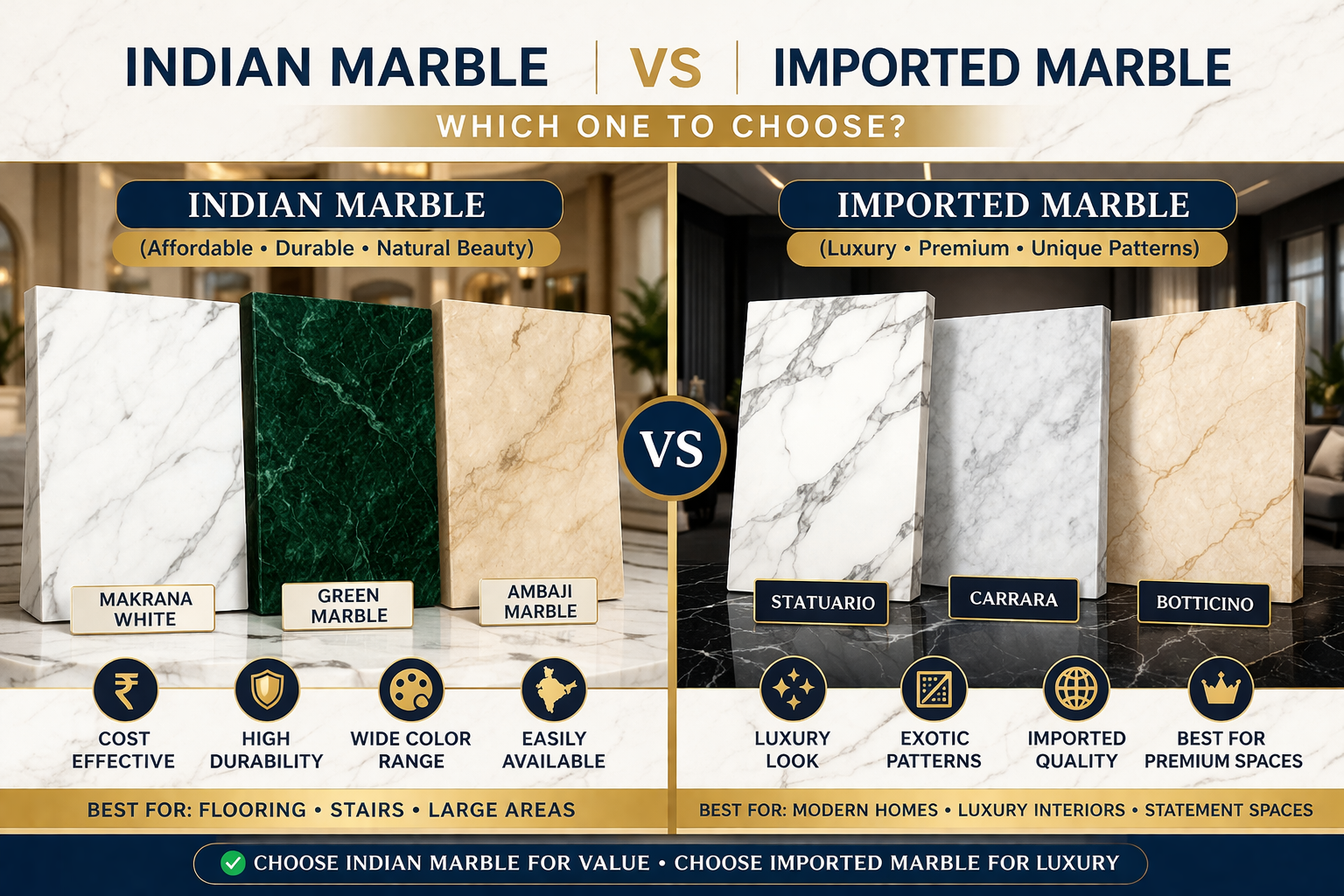
Indian marble is sourced locally from quarries across Rajasthan, Gujarat, and other regions. It is widely used in residential and commercial projects due to its affordability and durability.
Key Features:
- Available in a wide range of colors (white, green, brown, beige)
- Strong and suitable for heavy usage
- Cost-effective compared to imported marble
- Easy availability in large quantities
Popular types include Makrana White, Ambaji Marble, and Green Marble.
🌍 What is Imported Marble?
Imported marble is sourced from countries like Italy, Turkey, Greece, and Spain. It is known for its luxurious appearance and high-end appeal.
Key Features:
- Premium and elegant patterns
- Softer texture compared to Indian marble
- Used in luxury interiors and designer spaces
- Higher cost due to import and processing
Popular types include Statuario, Carrara, and Botticino marble.
⚖️ Indian Marble vs Imported Marble (Key Differences)
| Feature | Indian Marble | Imported Marble |
|---|---|---|
| Price | Affordable | Expensive |
| Durability | High | Moderate |
| Maintenance | Easy | Requires more care |
| Appearance | Natural & earthy | Premium & luxurious |
| Availability | Easily available | Limited / imported |
| Best For | Flooring, stairs, general use | Luxury interiors, statement spaces |
🏡 Which Marble is Better for Your Needs?
Choose Indian Marble if:
- You want a budget-friendly option
- You need durability for daily use
- You are working on large flooring areas
- You prefer low maintenance
Choose Imported Marble if:
- You want luxury aesthetics
- You are designing premium interiors
- You need unique patterns and textures
- Budget is not a constraint
🎨 Design & Interior Impact
Both marbles create different visual effects:
- Indian marble → Warm, natural, and traditional look
- Imported marble → Sleek, high-end, and contemporary feel
Designers often combine both to balance cost and aesthetics.
🧪 Maintenance Comparison
- Indian marble requires minimal maintenance and regular cleaning
- Imported marble may require sealing and careful handling
- Both benefit from periodic polishing
Choosing the right marble depends on how much maintenance you are willing to manage.
⭐ Stylestona Perspective
At Stylestona, we offer a wide range of both Indian and imported marble sourced from trusted quarries and global suppliers. Based in Kishangarh, Rajasthan, we help customers choose the right stone based on application, budget, and design preference, ensuring long-term durability and aesthetic value.
🟢 Conclusion
Understanding the difference between indian marble vs imported marble helps you select the right material for your project. Indian marble offers durability and affordability, while imported marble delivers unmatched luxury and design appeal. The best choice depends on your specific needs, budget, and interior vision. With proper guidance and sourcing, both options can enhance the beauty and value of your space.
✅ FAQ :
Q1. Which is better, Indian marble or imported marble?
It depends on your budget and design needs. Indian marble is durable and affordable, while imported marble offers premium aesthetics.
Q2. Is imported marble more expensive?
Yes, due to import costs and premium quality, it is generally more expensive.
Q3. Which marble is better for flooring?
Indian marble is more suitable for flooring due to its strength and cost-effectiveness.
Q4. Does imported marble require more maintenance?
Yes, it is softer and may require more care and sealing.